
Elena Lange · 2 October 2026
Ridge Soil Data Ties Drought Patterns to Shifts in Local Business Revenue Streams
Soil data collected across ridge regions continues to reveal direct connections between drought patterns and measurable changes in local business revenue streams, with monitoring stations recording persistent declines in soil moisture since early 2025. Researchers at regional agricultural centers have compiled datasets that link reduced water retention in ridge soils to decreased output from farms, retail operations, and service providers dependent on consistent precipitation. These findings draw from continuous sensor readings that capture volumetric water content at multiple depths, allowing analysts to map how prolonged dry spells alter economic activity in surrounding communities.
Stations positioned along elevated terrain have documented soil moisture dropping below critical thresholds for several consecutive months, a pattern that aligns with revenue reports from businesses in agriculture and hospitality. Data compiled through October 2026 shows that areas with the lowest recorded moisture levels experienced revenue contractions of 12 to 18 percent in sectors tied to crop yields and outdoor recreation. Analysts cross-reference these figures with precipitation records and evapotranspiration rates, producing models that predict further shifts when drought conditions extend beyond typical seasonal norms.
Soil Monitoring Networks and Data Collection Methods
Automated probes installed at intervals across ridge slopes transmit real-time measurements of moisture, temperature, and nutrient levels to centralized databases maintained by university extension services. These networks operate year-round, generating granular datasets that distinguish between short-term dry spells and multi-year drought trends. Technicians calibrate sensors quarterly to maintain accuracy, while satellite overlays provide broader context on vegetation stress that often precedes visible impacts on business operations.
One study released in mid-2026 examined three ridge counties and found that businesses sourcing from local farms reported inventory shortfalls when soil moisture remained under 15 percent for more than 60 days. Revenue tracking from chambers of commerce in those counties confirmed corresponding drops in wholesale transactions and related supply chain activity. The same datasets indicated that tourism-dependent enterprises, including lodging and equipment rentals, saw parallel declines once trail conditions and reservoir levels reflected the underlying soil deficits.
Economic Impacts on Agriculture and Related Sectors
Farm operators in affected ridge zones have adjusted planting schedules and irrigation volumes based on soil data alerts issued by regional cooperatives. Those adjustments have produced smaller harvests in key crops such as grains and forage, directly reducing income for both growers and the businesses that process or transport those goods. Figures from state agricultural departments indicate that counties with the most pronounced soil moisture deficits recorded average revenue losses exceeding $2.4 million per quarter in 2026.
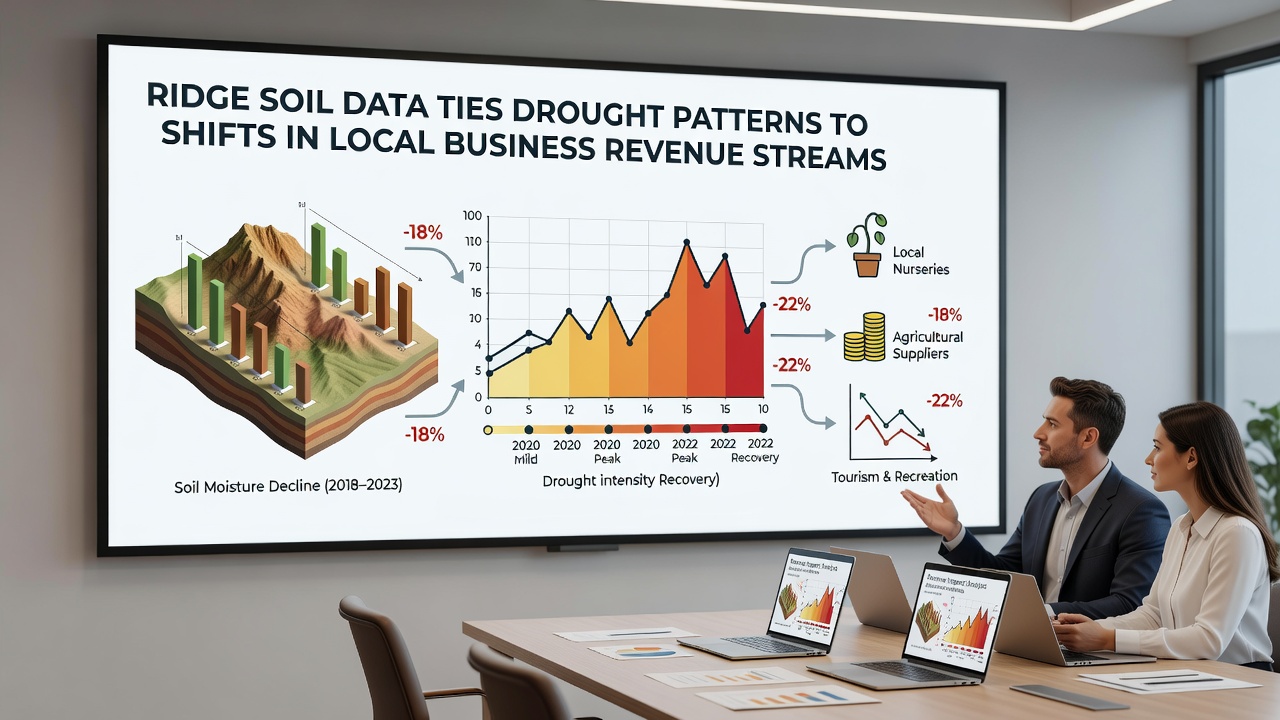
Retail outlets that depend on agricultural supply chains have experienced reduced foot traffic and order volumes once drought signals appear in the data. Distributors report fewer bulk purchases of feed, seed, and equipment parts, while restaurants sourcing seasonal produce note menu changes and higher sourcing costs when local yields fall. Economic modeling from research institutions shows these ripple effects compound when drought persists, because businesses often delay capital investments until soil conditions stabilize.
Broader Patterns Across Multiple Business Categories
Service industries tied to water availability, such as landscaping and outdoor event planning, register revenue shifts that track closely with soil moisture trends. Data aggregated through October 2026 demonstrates that months with elevated drought indices coincide with cancellations and scaled-back contracts, producing measurable shortfalls compared with years of normal precipitation. Observers note that businesses in ridge-adjacent towns diversify offerings more rapidly when soil data forecasts extended dry periods.
Local chambers of commerce compile quarterly revenue summaries that researchers then correlate with soil monitoring outputs. These comparisons reveal consistent timing: revenue dips typically appear four to six weeks after soil moisture readings cross established drought thresholds. Government agencies in several states have begun incorporating such correlations into drought early-warning systems, providing businesses with advance notice to adjust operations.
Conclusion
Soil data from ridge monitoring networks supplies increasingly precise indicators of how drought patterns influence local business revenue streams, with records through October 2026 confirming measurable economic consequences across agriculture, retail, and service sectors. Continued collection and analysis of these datasets support improved forecasting and adaptive strategies for communities that rely on stable soil conditions. Additional studies from sources such as the USDA Natural Resources Conservation Service and the Australian Department of Agriculture offer comparative frameworks that reinforce the observed linkages between moisture deficits and revenue fluctuations.